Metal Engraving
What is metal engraving?
Metal engraving is the art of cutting designs into the surface of metal by hand. The artisan uses a small hammer and a set of steel chisels with different tips to cut, push and shape the metal, line by line, until a detailed picture or pattern appears.
Engraving is done on copper, brass, silver and sometimes gold. It is used on trays, vases, bowls, pots, sugar bowls, frames, plaques, lamps and jewelry. Because the design is cut into the metal itself, it does not wear off with use and can last for generations.
Engraved metalwork is valued for its fine detail and for the play of light on its surface. As the light moves, the cut lines catch and reflect it, so the design seems to change as you look at it from different angles.


Metals used in engraving
Each metal behaves differently under the chisel and gives a different look:
- Copper: soft and warm in color. It is easy to cut and is often used for large trays, pots and vases.
- Brass: an alloy of copper and zinc with a golden color. It is harder than copper, holds fine detail well and takes a bright polish.
- Silver: bright and precious. It is used for smaller, finer pieces and for jewelry.
- Plated metals: some pieces are engraved in copper or brass and then plated with silver or another metal for a different finish.
The thickness of the metal matters as well. Thicker metal allows deeper cuts and gives a sturdier piece, while thin metal limits how deep the engraver can go.
Tools of the engraver
The engraver works with simple tools, but uses them with great precision:
- A light hammer, used for thousands of small, controlled taps.
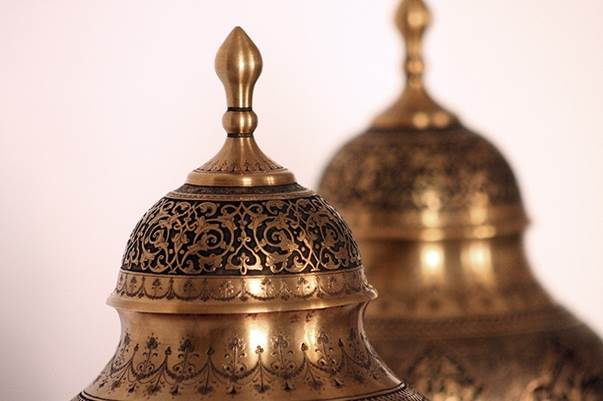
- Steel chisels with flat, pointed, rounded, curved and patterned tips. Each tip leaves a different mark in the metal, from a fine line to a small dot or a textured area.
- A support for the piece. Hollow objects are filled with a firm backing compound, so the metal does not dent while it is being worked, and flat pieces are fixed onto a firm base.
- Drawing tools, such as a fine scriber or a pen, to put the design onto the metal before cutting begins.
Many engravers make and sharpen their own chisels, and a set of tools can contain dozens of different tips.
How an engraved piece is made
Preparing the piece. The work starts with a well-made metal object. The surface is cleaned and smoothed, because scratches and dents would show through the finished design.
Drawing the design. The design is drawn directly on the metal, or first drawn on paper and transferred. For symmetrical designs, the surface is often divided into sections with light guide lines, so that repeated motifs are evenly spaced.
Supporting the metal. For hollow pieces such as vases and pots, the inside is filled with a backing compound and left to harden. This gives the thin metal a solid support, so the chisel can cut cleanly without bending the wall of the piece.
Cutting the outlines. The engraver follows the main lines of the design with the chisels, tapping them with the hammer. Each tap moves the chisel a tiny distance, so a single line can need hundreds of taps.
Adding detail and texture. Next, details are added inside the shapes: veins in leaves, feathers on birds, folds in clothing. Finally, the background is textured or lowered, so the design stands out. A large tray with a busy pattern can take weeks of work.
Finishing. When the engraving is finished, the backing compound is removed and the piece is cleaned. Some pieces are darkened in the background to make the design clearer, and then the raised parts are polished to a shine. Some pieces are given a clear protective coat to slow down tarnishing.

Styles of engraving
Engravers use several techniques, alone or together on the same piece:
- Flat engraving: fine lines are cut into the surface, and the design stays at the same level as the metal around it. This style is suited to delicate patterns and calligraphy.
- Relief engraving: the background is cut away or pushed down, so the design is raised above the surface. This gives a strong, three-dimensional effect.
- Deep engraving: the cuts are deeper, and the design has strong contrast between light and shadow.
- Openwork: parts of the metal are cut out completely, so light passes through the pattern. This style is often used for lamps, lanterns and covers.
- Dot and texture work: the background is filled with tiny dots or short strokes, which gives a matte surface that contrasts with the polished design.

Motifs and patterns
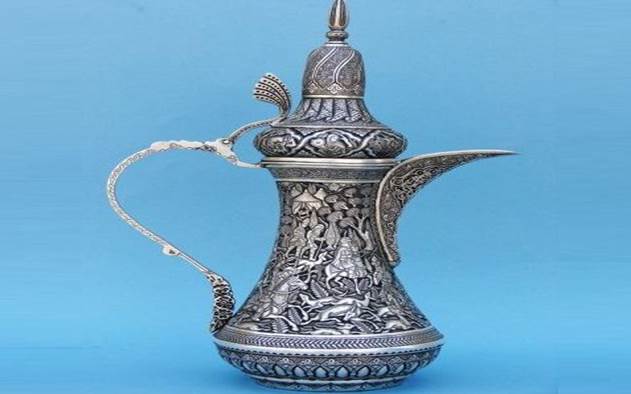
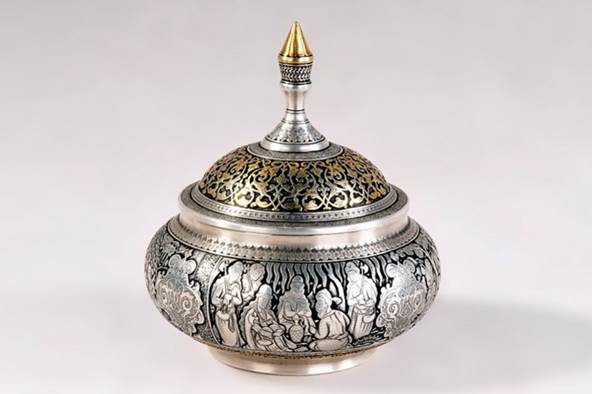
Engraved designs are very varied. Common motifs include arabesque scrolls, flowering branches, birds among leaves, hunting scenes, animals, geometric stars and borders, and calligraphy. Many designs combine a central scene or medallion with layers of decorative borders around it.
Some engravers follow traditional pattern books, while others create their own designs. In both cases, the skill lies in fitting the design to the shape of the object, so that the pattern flows around curves and fills the surface in a balanced way.

How to choose an engraved piece
These points help you judge the quality of hand engraving:
- Lines: good engraving has clean, confident cuts with even depth and no slips or scratches outside the design.
- Detail: fine textures in the background and small details in leaves, feathers and figures show a skilled hand.
- Depth and contrast: in relief work, the design should stand out clearly from the background.
- Balance: the design should be well spaced and fit the shape of the object, with borders that meet neatly.
- Weight: thicker metal is easier to engrave deeply and gives a more durable piece.
- Finish: polished areas should be bright and even, and darkened areas should look deliberate, not patchy.
Hand engraving always shows tiny variations. Perfectly identical repeats across a whole piece can be a sign of machine work.

Caring for engraved metalwork
Engraved metal is durable and easy to look after:
- Dust it regularly with a soft, dry cloth. A soft brush helps clean the deep lines of the design.
- Copper and brass slowly darken in contact with air. If your piece has no protective coat, you can clean it now and then with a mild metal cleaner made for copper or brass, then rinse and dry it well.
- If the piece has a clear protective coat, do not polish it; just wipe it with a soft, slightly damp cloth and dry it.
- Some owners like the darker tone that develops over time. It does not harm the metal, and you do not have to remove it.
- Keep the piece in a dry place, and avoid harsh chemicals, salty foods and acidic liquids on uncoated surfaces.
- If you use an engraved piece for serving, line it or use it for dry foods, and wash and dry it soon after use.

Engraving combined with other crafts
Engraving is often used together with other metal crafts. The metal frames of turquoise inlay pieces are frequently engraved, and some enameled and filigree pieces have engraved rims or bases. In these pieces, the engraving adds a second layer of detail and connects the different parts of the design.

A lasting craft
An engraved tray or vase holds hundreds of hours of work in its lines. Because the design is cut into the metal, it does not fade or peel, and a well-kept piece can be enjoyed for a very long time.

Engraving